Foundling Hospital, London 2026
Women, Money & Markets
Crisis & Resilience (1650-1950)
9th Annual Conference & Book Launch
The Foundling Museum, London
Thursday, Friday & Saturday, June 11-13, 2026
womenmoneymarkets.co.uk
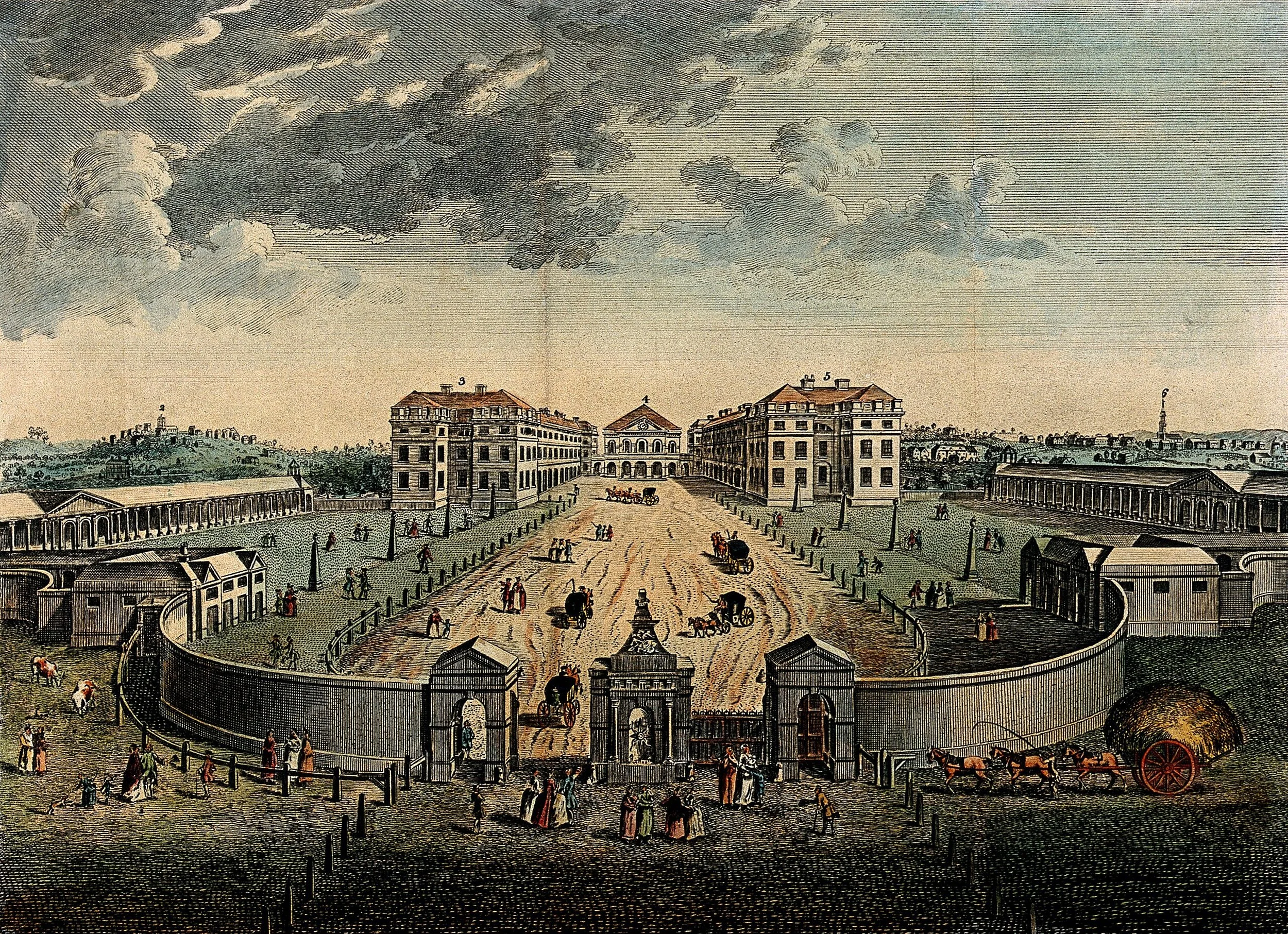
The Foundling Hospital, Holborn, London: a bird's-eye view of the courtyard, numbered for a key. Coloured engraving after L. P. Boitard, 1753. Iconographic Collections Keywords: Louis-Pierre Boitard; Theodore Jacobsen; Foundling Hospital (London)
Overview
We invite submissions for our 9th interdisciplinary conference exploring how women’s interactions with money, markets, and finance have shaped, and been shaped by, economic crises, financial literacy practices, and strategies for resilience across time and borders. This year, we especially welcome reflections on how evolving political landscapes reshape economic power, knowledge access, and inclusion.
We will be celebrating the publication of our first edited collection, Women, Money, and Markets: Representing the Invisible Hands of the Economy (Boydell & Brewer, 2026).
FINAL PROGRAMME
WMM 2026 PROGRAMME
Women, Money and Markets
www.womenmoneymarkets.co.uk
9th Annual Conference
THURSDAY 11 JUNE 2026
14:00–14:15 — Welcome, housekeeping, tea and coffee
Panel 1: Early Modern Material Economies
Chair: Emma Newport
14:15–15:30 (3 papers + Q&A)
Mario Grassi — Women’s Embodied Financial Agency through “Material” and “Immaterial” Inheritance
Astrid Wendel‑Hansen — From the Margins to the Market: Women, Material Culture, and Economic Practices in Early Modern Tallinn
Idit Ben‑Or — Foundling Tokens as a Source on Eighteenth‑Century Money Markets
15:30–15:40 — Short break
Panel 2: Authority, Agency, and Change
Chair: Jane Skelding
15:40–16:50 (3 papers + Q&A)
Elena Korchmina — Creating Economic Agency under Patriarchal Constraint: Russian Noblewomen’s Property Management, 1780s–1840s
Hazel Vosper — “My husband would be deeply offended should I demand to make my own investments”: Continuity and change within family investment practices at the turn of the twentieth century.
Lily Ford — A Great Lever: The Society of Woman Welders, 1916–1919
17:15 — Informal drinks at The Queen’s Larder, 1 Queen Square, London WC1N 3AR
18:30 — Informal conference dinner (Thursday) - Salaam Namaste, 68 Millman St, London WC1N 3EF
FRIDAY 12 JUNE 2026
09:15–09:45 — Arrivals
Panel 3: Accounting, Credit, and Market Engagement
Chair: Camille Stallings
09:45:–11:05 (3 papers + Q&A)
Laura Burnett — Her Halfe Penny: Women as Money‑Makers, Users, and Subjects in the Mid‑Seventeenth Century
Francesca Murray — Money Management of the Nineteenth‑Century Gardener’s Widow
Nisha Kumari (online) — To Keep Out of Debt: Army Wifehood, Financial Crisis, and Making Do in Colonial India
11.05–11:30 — Tea / coffee break
Panel 4: Money, Markets and the Novel
Chair: Sarah Dredge
11:30–12:40 (3 papers + Q&A)
Carol Stewart — “He That Would Keep His Integrity, Must Dwell in a Cell”: Resisting the Market in the Fiction of Penelope Aubin
Jolene Zigarovich — Jane Austen’s Heroines of Interest
Jocelynne Scutt — The Three Marys and the Money in Jane Austen
12:40–13:45 — Lunch
Panel 5: Capital, Finance, and Authority in Europe
Chair: Ruxandra Pavelchievici
13:45–14:45 (2 papers + Q&A)
Swenja Hiller & Juliane Clegg — Building Bridges: Women, Capital, and Business Transitions in the Nineteenth Century
Beatrice Moring — Women, Family, and Business in Nineteenth‑Century Urban Northern Europe
14:45-15:15— Break
Women’s Studies Group Roundtable
15:15-16:45
Karen Lipsedge — Storytelling and Eighteenth‑Century Representations of Women of Colour’s Financial Agency
Diane Clements — A Very Anxious and Affectionate Mother: Personal Indebtedness in Georgian England
Carolyn D. Williams — “Having Sighed Away My Senses for My Departed Pork”: Charlotte Charke (1713–1760) and the Economy of Makeshifts
Eleanor Franzén — “Prostitutes from Necessity”: Economics, Sentiment, and the Eighteenth‑Century Magdalen House
16:45-17:00 — Janette Rutterford: introducing the Austen app
17:00-18:30 — Book launch and conference drinks (Foundling Museum)
19:00 — Conference dinner (Friday) Nostimo 9 Brunswick Centre, London WC1N 1AF
SATURDAY 13 JUNE 2026
09:00-09:15 — Arrivals and coffee
Panel 6a: Skills, Guilds, and Reform
Chair: Peter Collinge
09:15–10:50 (4 papers + Q&A)
Sara D’Anna (online) — Women’s Work in the Guilds of Eighteenth‑Century Naples: Between Marginalisation and Inclusion
Jane Skelding — Working‑Class Women and the Economics of Charity: The Women’s Co‑operative Guild in Plumstead, 1888–1897
Short break
Panel 6b: Skills, Guilds, and Reform
Ruxandra Pavelchievici — Edith Abbott and Sophonisba Breckinridge, Actors of Double Emancipation: Promoting Social Work to an Academic Rank and Renewing the Vision of Women Workers (1905-1935)
Andrew Seltzer — Female Occupational Upskilling in Early Twentieth‑Century Britain
10:50-11:10 – tea and coffee
Panel 7: Gambling & Speculation
11:10-12:20 (3 papers + Q&A)
Chair: Joyce Goggin
Johanna Harrison‑Oram — None of Your Betting and Gambling in My Kitchen: Gendered Problematics of Financial Speculation in Esther Waters and A Child of the Jago
Sarah Dredge — Margaret Oliphant and Gendered Speculation
Christina Ballinger — Playing for Money: Becky Sharp and Her Winning Ways.
12:20-13:30- Lunch
12:40–13:30 — Optional guided tour of the Foundling Museum
Panel 9: Capital, Crisis and Discrimination
Chair: Beatrice Moring
13:30-14:40 (3 papers + Q&A)
Mark Hay – Female Entrepreneurship on the Amsterdam Capital Market, 1770-1825
Eva Bažantová, Ilona Bažantová — Financial Discrimination against Employed Women during the Great Depression in Czechoslovakia
Joyce Goggin — Women’s Unseen Labour in the Sponging Industry (Late Nineteenth–Early Twentieth Century)
14:40-14:50 — short break
Panel 10: Milliners, Makers, Material
Chair: Idit Ben-Or
14:50-16:00 (3 papers + Q&A)
Peter Collinge — The £20 Red Herring: Margaret Beeland, Milliner and Dressmaker
Ella Dzelzainis — Seamstresses, Antisemitism, and the Economics of Sweating: Ernest Jones’s “The Young Milliner” (1852)
Jenna Zmrzel (online) — More Than Wardrobe Advice? Myra’s Journal of Dress and Fashion (1875-1912) as a Record of Middle-Class Women’s Financial Agency
16:00-16:10— tea and coffee break
Panel 11: Global Economies: Then to Now
Chair: Emma Newport
16:10–17:20 (3 papers + Q&A)
Yuwei Qiu — British Views of Women Traders in Qing China during the Macartney Embassy
Karoliina Kantola — Exploring Alternatives to Microcredit and Microeconomics
Sophia Tzeng (online) — The Great Erasure: Women, Sense Suppression, and the Hidden Architecture of the Modern Economic Order
17:20-17:30— Closing remarks and farewells
——————
Thematic Areas
Potential contributions may address (but are not limited to):
Material Culture & Financial Activism
Drawing inspiration from The Foundling Hospital’s archives, how material items, including but not limited to sewing/knitting, tokens, calendars, etc., were used by women to teach, learn, or execute financial skills, especially when formal institutions excluded them; and how artifacts – e.g. pocketbooks, receipts, letters, teaching pamphlets – help to reveal financial practices that women adopted when formal systems were under threat or failed.
Resilience in Marginalisation
Examination of women’s survival strategies, real or fictional, in the face of systemic exclusion from formal markets, such as through cooperatives, informal credit, or communal aid.
Literature, Media & Representation
How women’s financial roles are portrayed during economic collapses or shifts, both in historical and fictional narratives of money and agency.
· Comparative and Cross-cultural Dimensions
o Global case studies comparing diverse legal and economic environments, from colonial economies to more recent policy changes.
o Investigations into differences and commonalities in how women in different societies responded to economic marginalisation or inclusion.
· Surviving Economic and Political Backlash
o Literary or artistic depictions of women exhibiting financial ingenuity or deftness against barriers, or amidst repression, particularly when legal safeguards are weakened.
o Women-led and women-participating resilience practices during discriminatory regimes or policy rollbacks.
How women acquired, deployed, or withheld financial knowledge during periods of political and economic upheavals (e.g., panics, bank collapses, depressions, pandemics).
Explorations of how diminished legal protections (e.g., in property rights, employment, reproductive rights) have disrupted women's financial agency.
Submission Guidelines
Abstracts: Up to 300 words for individual papers.
Panel Proposals: Include abstracts (≤300 words each) for up to three speakers.
Formats: Individual papers, panels, or roundtable discussions.
Publication Interest: State whether your work is suitable for future collections or journal issues.
Submit to: Enquiries to Dr. Emma Newport at e.newport@sussex.ac.uk,.
Submissions via Google Form or via QR code below.
Deadline: February 1st 2026


QR code for registration form